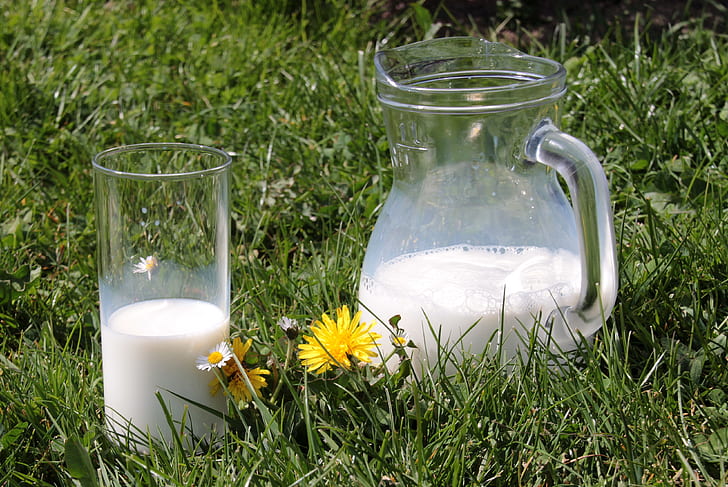
Feature image credit to PickPik
Since the first usage of DNA evidence in 1986, DNA profiling methods have significantly improved in efficiency and reliability to link suspects to crime scenes. However, current methods require a minimum quantity of DNA evidence to successfully profile DNA. And when crimes occur outdoors, crucial evidence is left exposed and vulnerable to the elements – but could be protected if it’s mixed in soil.
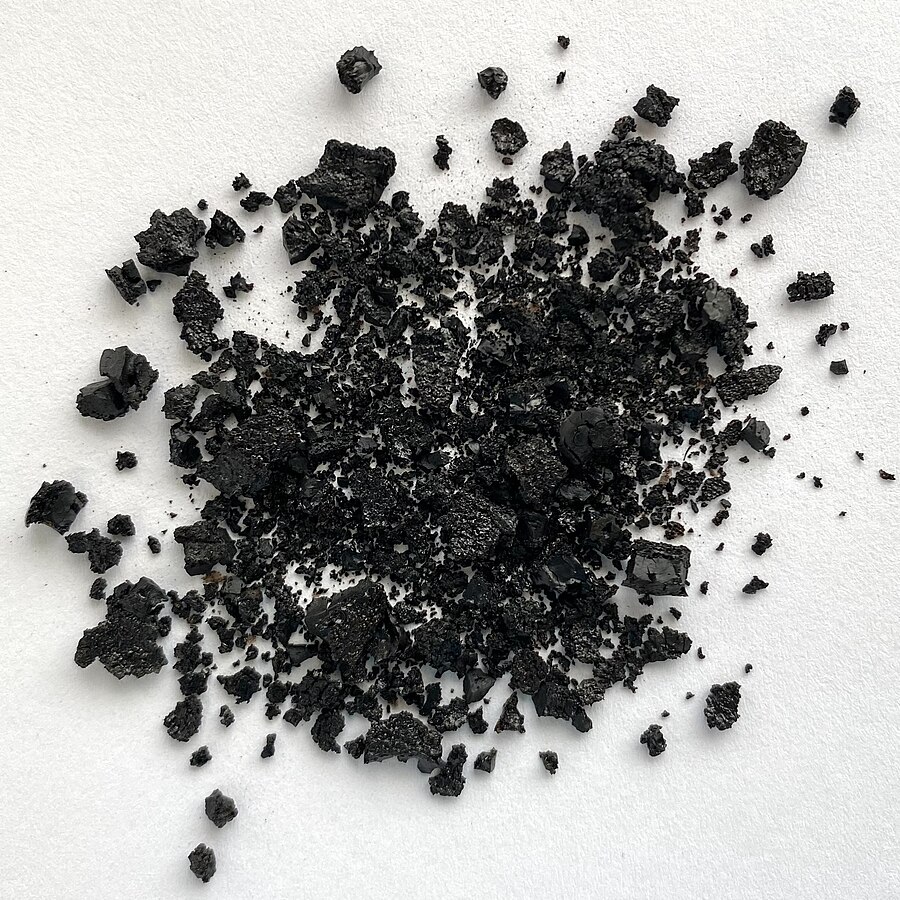
Soil adsorbs the nucleic acids that make up DNA. This causes the DNA to stick to the surface of the soil particles, which can protect it from degradation, but also makes it more difficult to extract. This problem is further amplified by humic substances naturally found in soil, which inhibit the polymerase chain reaction (PCR) step of DNA analysis. Agricultural researchers have used skim milk to release bacterial DNA from soil to study its microbiomes since before the 2000s, making it an established method with potential forensics use. To that end, Hirashima et al. analyzed if adding skim milk could efficiently extract human DNA under various conditions.
Skim milk and a common lab protein called BSA (used as a comparative control) were first pre-mixed into three types of soil, and then added to soil containing DNA from blood, buccal cells, or skin cells. The researchers used the three most common soil types in Japan: andosol (from volcanic ash), sand-dune regosol (from sandy coastal areas), and gray lowland soil (from rivers and streams). To determine how well skim milk improved the DNA extraction process, the scientists performed their standard DNA workflow to extract the DNA, quantify the amount present, and obtain the DNA profiles via short tandem repeat (STR) analysis.
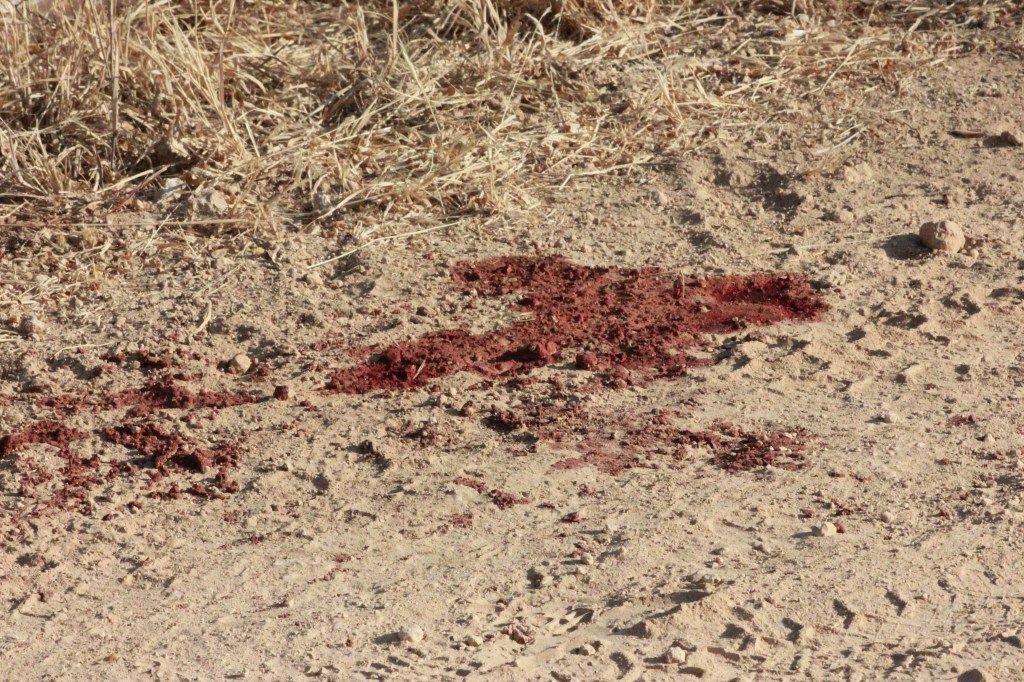
Hirashima et al. found an increase in blood DNA recovered across all soil types with the addition of skim milk, substantially more so than untreated soil and moderately better than BSA-treated soil. They also observed that the more skim milk added to the samples, the higher the DNA yield. This pattern was also consistent for buccal cells and skin cells in all soil types. However, differing quantities of skim milk at various temperatures worked best for different soil types. For example, andosol required at least 5 milligrams (about a grain of sand) of skim milk at 56°C incubation to result in peak DNA concentration readings, while gray lowland soil required 1 milligram (1/5 a grain of sand) of skim milk at 70°C. This is likely due to the distinct soil compositions interacting with skim milk differently.
While it may seem strange for skim milk to work so well in extracting DNA from soil, the answer lies in its chemistry. Andosol is a soil filled with clay minerals that contain hydroxyl (—OH) groups. DNA is adsorbed to soil when these hydroxyl groups bind to the phosphate groups on the DNA backbone. Skim milk also contains phosphate ions, so when it’s added to the soil, skim milk phosphates disrupt the connection between the soil’s hydroxyl groups and the DNA’s phosphate groups, leading to DNA release from the soil.
STR analysis confirmed that the number of alleles detected in the skim milk and BSA samples increased significantly as opposed to the control (Figure 3). The more alleles that are detected, the more DNA is being successfully recovered and the easier it is to identify individuals using STR analysis. This is particularly true for skin cells, which resulted in little to no alleles for the untreated soil sample and a notable increase with the addition of skim milk. All alleles present in the DNA from the blood and buccal cells were almost always completely recovered in both the BSA and skim milk samples.
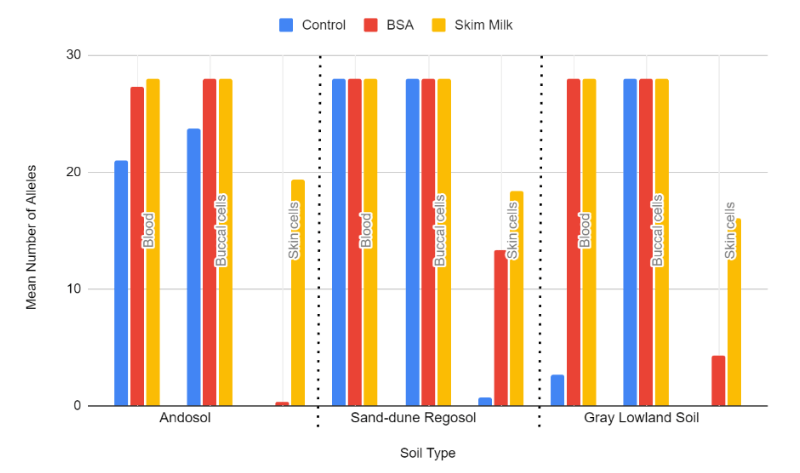
To work around the natural process of DNA degradation in soil, the DNA recovery rate must be consistently high to obtain robust DNA profiles that provide good evidentiary value. Under the various conditions that DNA samples were tested in, Hirashima et al. demonstrated that skim milk generally works best for DNA recovery in all soil and DNA types. Even so, the incubation temperature, soil type, and DNA source all play a role in the efficacy of this method. The variability in the data between different soil and DNA types can serve as useful information for future forensic analysts to determine if this method of DNA extraction is the best way forward. If this technique were to be used in a real case, the soil type would first need to be identified through its physical and chemical properties to then accurately determine the temperature and amount of skim milk needed for the best results. Clearly, milk isn’t just for pouring into cereal; it can also be used for DNA recovery!
| Title | Development of an effective method of human DNA extraction from soil as forensic evidence |
| Authors | Hiroko Hirashima, Rinnosuke Hisazumi, Maria Luisa T. Mason, Akihiro Yamamoto, Yuichi Saeki |
| Year | 2022 |
| Journal | Forensic Science International |
| URL | https://www.sciencedirect.com/science/article/pii/S0379073822001141 |

 ForensicBites
